

Blog / Buying Guides

Trading In Your Vehicle Toward a Used Car: A Guide for Buffalo and Monticello Shoppers

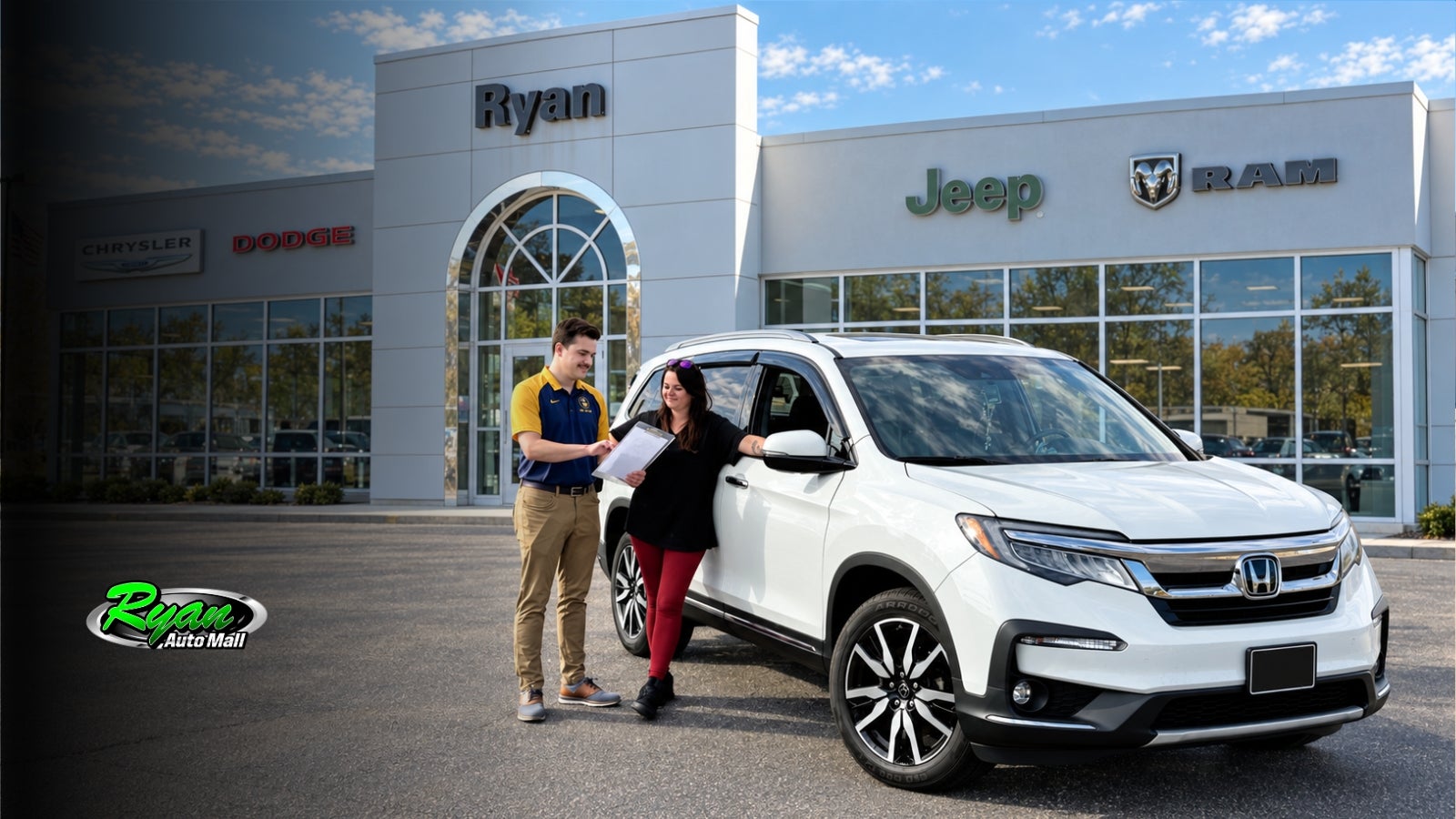
Two people reviewing a clipboard beside a white Honda Pilot in front of Ryan CDJR Buffalo

If you are shopping for a used vehicle in Buffalo or Monticello, your current car, truck, or SUV may be part of your purchase plan. A trade-in can simplify the transition, but understanding the vehicle's appraised value, any outstanding loan payoff, and the complete purchase figures is important.

This guide from Ryan Auto Mall explains what to prepare, which questions to ask, and how to compare your options before trading toward your next used vehicle.

Start with a Trade-In Estimate

An online estimate can help you begin planning. Have your vehicle's year, make, model, mileage, and equipment information available, and describe its condition accurately. Include known damage, mechanical concerns, and modifications.

You can request a trade-in estimate through Ryan Auto Mall, then discuss the next steps with the dealership handling your purchase.

Treat the estimate as a starting point. Final trade-in value depends on the dealership's evaluation of the actual vehicle and its condition.

Prepare Your Vehicle and Information for an Appraisal

Gather available maintenance records and make a note of recent work, such as tires, brakes, or scheduled services. Bring all available keys and remotes, and ask the dealership which ownership documents and identification you will need.

A clean, accessible vehicle makes it easier to review its condition. Remove personal belongings so the appraiser can examine the passenger compartment and cargo areas. Be ready to explain any warning lights, damage, or known repair needs.

Before spending money on major repairs solely to increase trade-in value, discuss the vehicle's current condition with the dealership. Repair costs do not necessarily translate into an equal increase in its appraised value.

Check Your Loan Payoff Before You Shop

If your vehicle still has a loan, request a current payoff quote from your lender. Confirm how long the quote is valid; the payoff may differ from the balance shown on your latest statement.

Compare the confirmed payoff with the appraised trade-in value:

  • Positive equity: The trade-in value exceeds the loan payoff.
  • Negative equity: The loan payoff exceeds the trade-in value.

For example, a $12,000 trade-in value with a $9,000 payoff leaves $3,000 in positive equity before other transaction costs. A $12,000 value with a $14,000 payoff leaves a $2,000 shortfall. These figures are illustrations, not estimates or offers.

Trading a vehicle does not erase an outstanding shortfall. Ask how it would be handled. If negative equity is included in a new loan, subject to lender approval, it increases the amount borrowed and can increase interest costs. Consider whether waiting and reducing the existing balance would better fit your budget.

Choose Your Next Used Vehicle Around Your Needs

While reviewing your trade-in, build a shortlist of replacement vehicles. Consider passenger space, cargo, your commute, parking, and any towing or hauling requirements.

Browse Ryan Auto Mall's combined pre-owned inventory to compare vehicles offered by our dealerships in Buffalo and Monticello. Review each listing's mileage, equipment, current pricing, and selling dealership.

Your next vehicle does not need to match the body style or manufacturer of your trade-in. Focus on the individual vehicle's suitability and condition rather than choosing only by the amount you expect to receive for your current one.

Review the Replacement Vehicle's Preparation and Coverage

Ask the selling dealership what inspection and reconditioning work was completed on the used vehicle you are considering. Discuss any documented repairs, replaced components, and recommended follow-up maintenance. Work varies by vehicle, so request the specific details.

Review its vehicle history report, take a test drive, and ask about arranging an independent inspection. Warranty coverage also varies. Read the Buyers Guide and any applicable written warranty terms before making a decision.

Compare the Complete Purchase Figures

Ask for a written breakdown that shows the replacement vehicle's price, your trade-in allowance, the loan payoff, any cash down payment, applicable taxes and fees, and optional products you choose.

If financing, compare the annual percentage rate, loan term, amount financed, monthly payment, and total of payments. A payment figure alone does not show the complete cost of the loan.

Visit our Ryan Auto Mall financing page to find information and dealership-specific tools. Financing is subject to credit approval, and available terms depend on the applicant, vehicle, and lender.

Before signing, ask how and when the existing loan will be paid off and how you can verify completion with your lender. Review the documents carefully and resolve any differences between the written figures and your understanding of the transaction.

Plan Your Trade-In with Ryan Auto Mall

Ryan Auto Mall includes Ryan Chevrolet and Ryan Cadillac in Buffalo, Ryan Chrysler Dodge Jeep Ram of Buffalo, and Ryan Chrysler Dodge Jeep Ram of Monticello.

Start with an estimate and a shortlist of used vehicles, then contact the selling dealership identified on the listing. Share the stock number or listing link, explain that you have a trade-in, and ask what to bring for the appraisal.

Confirm the replacement vehicle's equipment, pricing, selling location, and availability before visiting. Our teams can help you review the trade-in evaluation, any outstanding payoff, and your next purchase together.
Posted in:

Related Posts

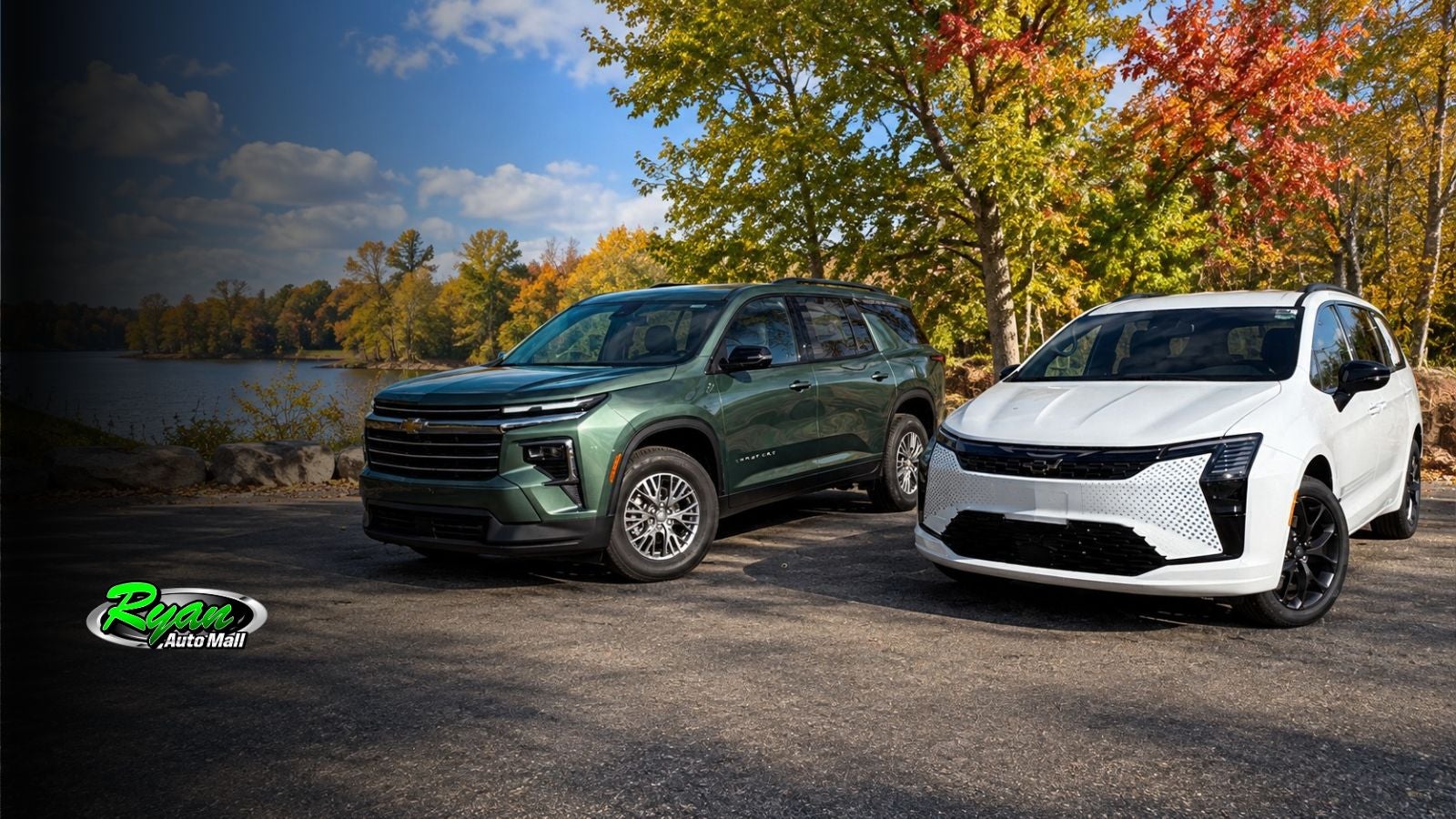
2027 Chevrolet Traverse SUV in green and Chrysler Pacifica minivan in white parked side by side at Ryan Auto Mall in Minnesota.

SUVs vs. Minivans: Which Is Best for Your Family in Minnesota?

SUVs vs. Minivans: Which Is Best for Your Family in Minnesota? Choosing the right family vehicle is about much more than appearance or price. Whether you're transporting young children, teenagers, grandparents, or a combination of passengers and luggage, you need a vehicle that fits your everyday life. For families in Buffalo, Monticello, and surrounding Minnesota communities, SUVs and minivans offer a wide variety of choices. From the Chevrolet Traverse and Tahoe to the Jeep Grand Cherokee L, Dodge Durango, and Chrysler Pacifica, there are vehicles designed to meet very different family needs. But should you choose an SUV or a minivan? And is buying new or used the better option? At Ryan Auto Mall, we believe the best approach is to compare both vehicle types, explore their features, and choose the one that works for your family and budget. SUV or Minivan: What's the Difference? SUVs and minivans can both provide comfortable, versatile family transportation, but their designs offer different advantages. SUVs come in a wide range of sizes, from compact two-row models to spacious three-row vehicles. Depending on the model and configuration, they may offer all-wheel drive, four-wheel drive, increased ground clearance, and substantial towing capabilities. Minivans emphasize passenger convenience, easy access, and flexible interior space. Sliding side doors can be particularly useful for families with young children, especially when loading car seats or parking in tight spaces. A minivan may be the more practical choice for a family prioritizing passenger access and cargo flexibility. An SUV may be preferable for drivers seeking particular drivetrain options, towing capabilities, or vehicle dimensions. The best choice depends on how you plan to use it. Family Seating: Two Rows, Three Rows, or a Minivan? One of the first decisions is how many passengers you need to accommodate regularly. A two-row SUV may be ideal for a smaller family that wants comfortable seating and generous cargo space without moving to a larger vehicle. Three-row SUVs, including the Chevrolet Traverse, Chevrolet Tahoe, Jeep Grand Cherokee L, and Dodge Durango, offer additional seating for families who frequently carry more passengers. Minivans such as the Chrysler Pacifica provide another approach to family transportation, with sliding doors and interior layouts designed around passenger access. When comparing vehicles, consider: How easily children and adults can enter and exit Whether child seats fit your preferred seating positions Third-row legroom and accessibility Cargo space with all passenger seats occupied Available heating, ventilation, and convenience features Whether the seating configuration accommodates your family comfortably Seating capacity and equipment vary by model year, trim, and individual vehicle. For families comparing larger SUVs, explore our used third-row SUVs in Minnesota. Why the Chrysler Pacifica Deserves a Closer Look Families who begin shopping for an SUV sometimes discover that a minivan better meets their needs. The Chrysler Pacifica is an excellent vehicle to include in that comparison. Depending on model year and configuration, Pacifica models may offer power sliding doors, flexible seating, convenient storage solutions, and a variety of driver-assistance and comfort technologies. Sliding doors can make a significant difference when loading children or helping passengers enter and exit in crowded parking areas. Certain configurations also offer Stow 'n Go seating, allowing selected seats to fold into the floor for additional cargo flexibility. Seating features vary by powertrain and model year, so shoppers should confirm the equipment of the specific Pacifica they're considering. For families regularly transporting children, sports equipment, groceries, or vacation luggage, a minivan's practical advantages are worth experiencing firsthand. Popular SUVs to Compare for Family Driving Ryan Auto Mall represents several brands offering SUVs suitable for different family needs. Chevrolet Traverse: A three-row midsize SUV offering passenger space, flexible cargo arrangements, and available all-wheel drive on applicable models. Chevrolet Tahoe: A full-size SUV worth considering for larger families or those with additional towing requirements. Jeep Grand Cherokee L: A three-row SUV combining passenger accommodations with available four-wheel-drive capability. Dodge Durango: A three-row SUV offering family seating and model-dependent towing capabilities. Chevrolet Equinox and Jeep Compass: Smaller SUVs that may suit families who don't require a third row. These examples are not a ranking of safety or reliability. Features, seating configurations, powertrains, and specifications vary by model year and trim. Our used inventory may also include SUVs and minivans from other manufacturers, providing additional opportunities to compare vehicles. Explore used SUVs at Ryan Auto Mall, or browse our complete pre-owned selection. Safety Features to Consider in a Family Vehicle Safety should be a priority whether you're buying a new vehicle or a pre-owned one. Modern SUVs and minivans may offer technologies such as automatic emergency braking, forward collision warning, blind-spot monitoring, rear cross-traffic alerts, lane-keeping assistance, and parking assistance. However, availability and performance vary by model, model year, trim, and equipment. When comparing vehicles, research crash-test ratings for the specific model year through the Insurance Institute for Highway Safety (IIHS) and National Highway Traffic Safety Administration (NHTSA). Families using child restraints should also review LATCH anchor locations, tether anchors, and seating compatibility. Bring your child seats to the dealership when possible and confirm proper installation using the vehicle and child-restraint manufacturers' instructions. For used vehicles, check the VIN for open safety recalls and ask about any required repairs. Minnesota Winters: Do You Need AWD? Minnesota weather adds another consideration when choosing a family vehicle. Many SUVs offer available all-wheel drive or four-wheel drive. Certain minivans also offer all-wheel drive, depending on the model and configuration. These systems can improve acceleration traction in slippery conditions, but they do not replace appropriate tires or careful winter driving. When comparing vehicles, consider tire type and condition, heating and defrosting performance, visibility, ground clearance, and your typical driving routes. Winter tires can provide important traction benefits in cold, snowy, and icy conditions, regardless of drivetrain. You can also explore used AWD vehicles available through Ryan Auto Mall. Cargo Space: Think Beyond the Specifications Families often focus on total cargo capacity, but usable space is equally important. A three-row SUV may offer substantial maximum cargo capacity while providing less storage behind its occupied third row. Minivans often provide useful cargo flexibility while retaining passenger seating, although configurations vary. Think about what your family regularly carries: strollers, sports bags, groceries, luggage, camping equipment, or other everyday items. If possible, bring a few representative items when comparing vehicles. Seeing how they fit can tell you more than cargo specifications alone. Should You Buy a New or Used Family SUV or Minivan? Both new and used vehicles offer advantages. Benefits of Buying New A new SUV or minivan gives you access to the latest equipment offered on that model, current manufacturer warranty coverage, and the opportunity to select from available trims and configurations. Depending on the manufacturer and current programs, new vehicles may also qualify for special financing or other incentives. For shoppers interested in the latest technology, safety equipment, and model updates, a new vehicle may be especially appealing. Benefits of Buying Used A used SUV or minivan may allow you to purchase a larger vehicle, higher trim level, or additional features within your budget. Used inventory also provides opportunities to compare vehicles from different manufacturers and model years. When shopping used, review mileage, maintenance history, equipment, condition, and available warranty coverage. A free CARFAX Vehicle History Report is available on our website. Ask the selling dealership about inspection and reconditioning work, and consider an independent inspection before purchase. Which Offers Better Value? There is no universal answer. Compare the total purchase price, financing terms, insurance costs, expected maintenance, warranty coverage, and anticipated ownership period. The right decision is the one that provides the features your family needs at a total cost you're comfortable with. Financing and Trading In Your Current Vehicle Whether you're purchasing a new SUV, a new minivan, or a pre-owned family vehicle, your current vehicle may help toward your next purchase. You can trade in a car, truck, SUV, or minivan. Your trade-in doesn't need to be the same type of vehicle you're buying. Ryan Auto Mall offers online resources to help you request a trade-in estimate, explore financing options, and compare used vehicle payments. Financing is subject to credit approval, and final trade-in value depends on the dealership's evaluation. Any outstanding loan balance will affect the amount available toward your next vehicle. Frequently Asked Questions About Family SUVs and Minivans Is an SUV or minivan better for a family with young children? A minivan's sliding doors and passenger-access features can be particularly convenient for families using child seats. SUVs offer a variety of seating configurations, sizes, and drivetrain options. Compare the specific vehicles with your family's needs in mind. Is a Chrysler Pacifica a good alternative to a three-row SUV? A Pacifica is worth considering if passenger access, flexible seating, and cargo convenience are priorities. Compare the features and configuration of the specific Pacifica with the SUVs on your shopping list. Are three-row SUVs better for Minnesota winters? Not necessarily. Winter performance depends on tires, drivetrain, vehicle condition, and driving conditions. AWD or 4WD may help with acceleration traction, but appropriate tires and careful driving remain essential. Is it better to buy a new or used family SUV? New vehicles may provide current technology and manufacturer warranty coverage. Used vehicles may offer more choices within a particular budget. Compare purchase price, equipment, financing, warranty terms, and expected ownership costs. Can I trade in my current vehicle toward a new or used SUV or minivan? Yes. Request a trade-in estimate and discuss the final value with the selling dealership. Any outstanding loan balance will affect the amount available toward your purchase. Where can I shop for new and used SUVs and minivans near Buffalo or Monticello, Minnesota? Ryan Auto Mall includes Chevrolet, Cadillac, Chrysler, Dodge, Jeep, and Ram dealerships serving Buffalo, Monticello, and surrounding Minnesota communities. Browse available inventory online and contact the selling dealership to confirm vehicle location, equipment, pricing, and availability. Find Your Next Family Vehicle at Ryan Auto Mall Whether you're considering a new Chrysler Pacifica, a Chevrolet Traverse, a Jeep Grand Cherokee L, or a pre-owned family vehicle from another manufacturer, comparing your options is the best place to start. Ryan Auto Mall brings together Ryan Chevrolet and Ryan Cadillac in Buffalo, Ryan Chrysler Dodge Jeep Ram of Buffalo, and Ryan Chrysler Dodge Jeep Ram of Monticello. Explore our new vehicle inventory, used SUVs, and complete pre-owned inventory to compare available vehicles. Our sales teams can help you review seating, equipment, financing, and trade-in options. Contact the selling dealership to confirm availability and arrange a test drive.

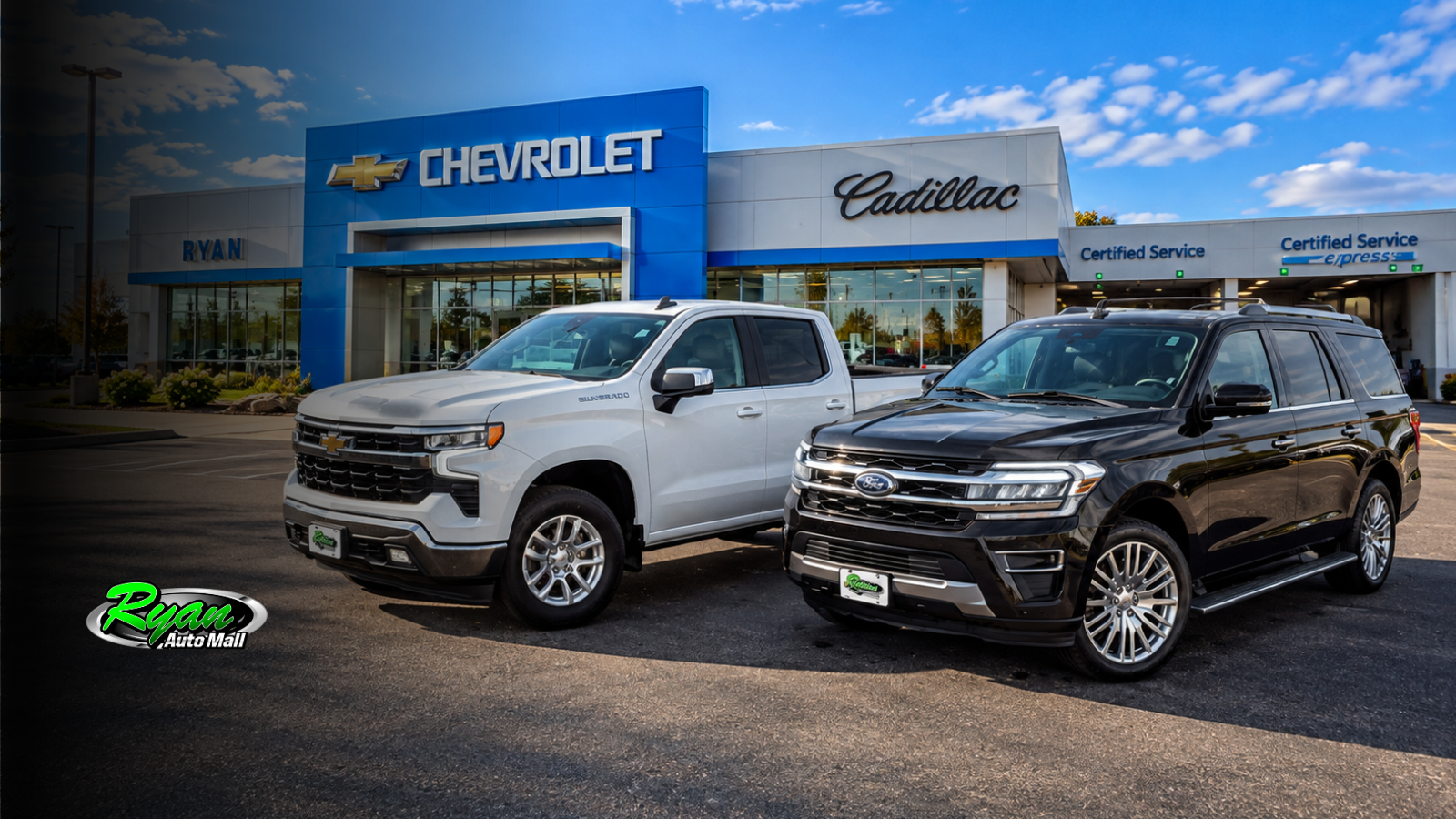
Used SUV and pickup truck parked side by side at Ryan Auto Mall

Used SUV or Used Truck? How to Choose for Your Minnesota Driving Needs

Choosing between a used SUV and a used pickup truck starts with how you will use your next vehicle. Passenger space, cargo access, towing requirements, parking, and ownership costs all deserve a place on your checklist. For shoppers in Buffalo, Monticello, and surrounding Minnesota communities, either vehicle type may fit. This guide from Ryan Auto Mall can help you compare individual vehicles, review their condition and preparation, and find the right selling dealership before arranging a visit. Start with Your Passengers and Everyday Routine How many people regularly ride with you? Do you need space for child seats, adult passengers, or someone who needs easier entry and exit? A used SUV may suit shoppers who want passenger seating and an enclosed cargo area in one vehicle. Some SUVs offer a third row, but seating capacity and cargo room vary. Check how much storage remains with every seat you plan to use occupied. A pickup can also accommodate passengers, depending on its cab configuration. Compare rear-seat legroom, door openings, and seating capacity on the specific truck. Cab names differ between manufacturers, so try the seats rather than relying on the name alone. Compare Enclosed Cargo Space with an Open Bed Think about what you carry during a typical week. Groceries, luggage, sports bags, and strollers call for different space than landscaping supplies, bulky tools, or dirty outdoor equipment. An SUV's enclosed cargo area can be convenient for everyday belongings. Check the load-floor height, opening width, and space with the passenger seats in use. Folding seats may increase cargo room, but those seats then become unavailable for passengers. A pickup bed may better suit large or messy loads. Confirm bed length and width, tie-down points, and any installed liner or cover. If you need weather protection or secure storage, examine the actual cover or cap; do not assume every setup provides the same protection. Start your comparison with our used SUVs and crossovers or used pickup trucks. Review individual listings for mileage, equipment, pricing, and the selling dealership. Match Towing and Hauling Needs to the Specific Vehicle If you plan to pull a boat, camper, or utility trailer, write down its expected loaded weight before shopping. Both SUVs and pickups can have towing equipment, but capability varies significantly by vehicle and configuration. Confirm the specific vehicle's towing and payload ratings using manufacturer information, vehicle labels, and the owner's manual. Engine, drivetrain, axle ratio, hitch equipment, and other details can affect suitability. Passengers, cargo, accessories, and trailer tongue or pin weight also use available payload. A hitch alone does not tell you how much a vehicle can tow. Ask the selling dealership to help review the vehicle's configuration, installed equipment, and applicable weight limits. Also ask about any modifications that may affect its suitability for your intended use. Consider Parking, Commuting, and Minnesota Conditions Measure your garage and consider the parking spaces you use regularly. During a test drive, assess visibility, maneuvering, ride comfort, and access to controls. Compare individual vehicles rather than assuming every SUV is easy to park or every truck feels the same. For Minnesota driving, confirm the drivetrain and review the owner's manual for its operation. Check tire type and condition, heater and defroster operation, and visible corrosion. Neither an SUV badge nor a pickup body style tells you which drivetrain or equipment a particular vehicle has. If you are comparing all-wheel drive and four-wheel drive, ask how the specific system operates and which modes suit your driving conditions. Tire choice and condition remain important regardless of drivetrain. Review Inspection and Reconditioning Details Every used vehicle at Ryan Auto Mall is inspected and reconditioned. The work completed varies according to the individual vehicle's needs, so compare the preparation details of the SUVs and trucks you are considering. Ask what was inspected, what was repaired or replaced, and whether any follow-up maintenance is recommended. Reconditioning may include an oil change, tires, brakes, filters, alignment, or detailing, depending on the vehicle. Do not assume every vehicle received the same services. What inspection and reconditioning work was completed? Are records or details of that work available to review? Were any tires or brake components replaced? What maintenance is approaching based on age, mileage, and intended use? Are maintenance records available for the engine, transmission, and drivetrain? If you expect to tow, haul, or use the vehicle in demanding conditions, discuss those plans with the selling dealership. Ask how your intended use relates to the manufacturer's maintenance recommendations. Check Vehicle History and Current Condition A free CARFAX Vehicle History Report is available on our website. Match the report to the vehicle's VIN and review its reported ownership, service, accident, and title history. Ask the selling dealership to explain any details you would like clarified. A history report may not include every incident or repair and does not establish the vehicle's present mechanical condition. Review the vehicle in person, ask about inspection findings, and take a test drive. You can also ask about arranging an independent inspection before purchase. The Federal Trade Commission's used-car guide provides additional shopping guidance. Understand Warranty Coverage and Written Terms Warranty coverage varies by vehicle. Ask about any remaining factory warranty, dealer warranty, or other applicable coverage. Review the Buyers Guide and written documents for covered components, duration, mileage limits, exclusions, and any applicable deductible. If an optional service contract is offered, review its separate cost and terms, including where repairs can be performed. Inspection and reconditioning do not mean every used SUV or truck has identical warranty coverage. Minnesota's used-car warranty law applies to certain dealer-sold vehicles and includes eligibility rules and exclusions. Ask how it applies to the particular SUV or pickup you are considering and review the Minnesota Attorney General's used-car warranty guidance. Compare Purchase and Ownership Costs Look beyond the asking price. Compare insurance quotes, expected fuel use, maintenance needs, tire replacement costs, and any accessories you would need to add. Ask for complete purchase figures, including applicable fees, taxes, registration costs, and any optional products you choose. If financing, compare the annual percentage rate, loan term, amount financed, monthly payment, and total of payments. Explore our financing information or complete our online financing application. The selling dealership can help review options for an eligible vehicle. Financing is subject to credit approval, and available terms depend on the applicant, vehicle, and lender. You can also request a trade-in estimate. Final trade-in value depends on the dealership's evaluation, and any outstanding loan balance affects the amount available toward your purchase. Build a Shortlist Before Your Test Drives Keep the same information for each SUV or truck so you can compare your options: Year, make, model, trim, VIN, and stock number Mileage, drivetrain, seating, and cargo or bed configuration Vehicle-specific towing and payload ratings, if relevant History-report findings and available maintenance records Inspection and reconditioning work completed Complete purchase price and applicable coverage Selling dealership, vehicle location, and availability During each visit, try the seating positions, cargo arrangements, and features you expect to use. Drive on roads similar to your daily routes and raise any questions before deciding. Shop Used SUVs and Trucks in Buffalo and Monticello An SUV may fit your routine if enclosed cargo space and passenger flexibility are priorities. A pickup may fit better if you regularly need a bed for bulky equipment or materials. For towing, either choice requires checking the specific vehicle against your trailer and load requirements. Browse Ryan Auto Mall's combined used inventory to compare vehicles offered by our family-owned dealerships in Buffalo and Monticello. Explore used SUVs, used trucks, or used cars and sedans if your search includes other vehicle types. Our group includes Ryan Chevrolet and Ryan Cadillac, which share the Ryan Chevrolet Cadillac dealership in Buffalo, Ryan Chrysler Dodge Jeep Ram of Buffalo, and Ryan Chrysler Dodge Jeep Ram of Monticello. Each listing identifies its selling dealership. Before visiting, contact the dealership identified on the listing with the stock number or vehicle link. Confirm the vehicle's location, equipment, and availability, then arrange a test drive to see how it fits your everyday needs. If you need help finding the appropriate team, contact Ryan Auto Mall.